
Dried Flower Care

No Direct
Sunlight
Avoid
Humidity

Avoid
Heat
Dust
Gently

Handle
Gently
A Gentle Guide to Dried Flower Care
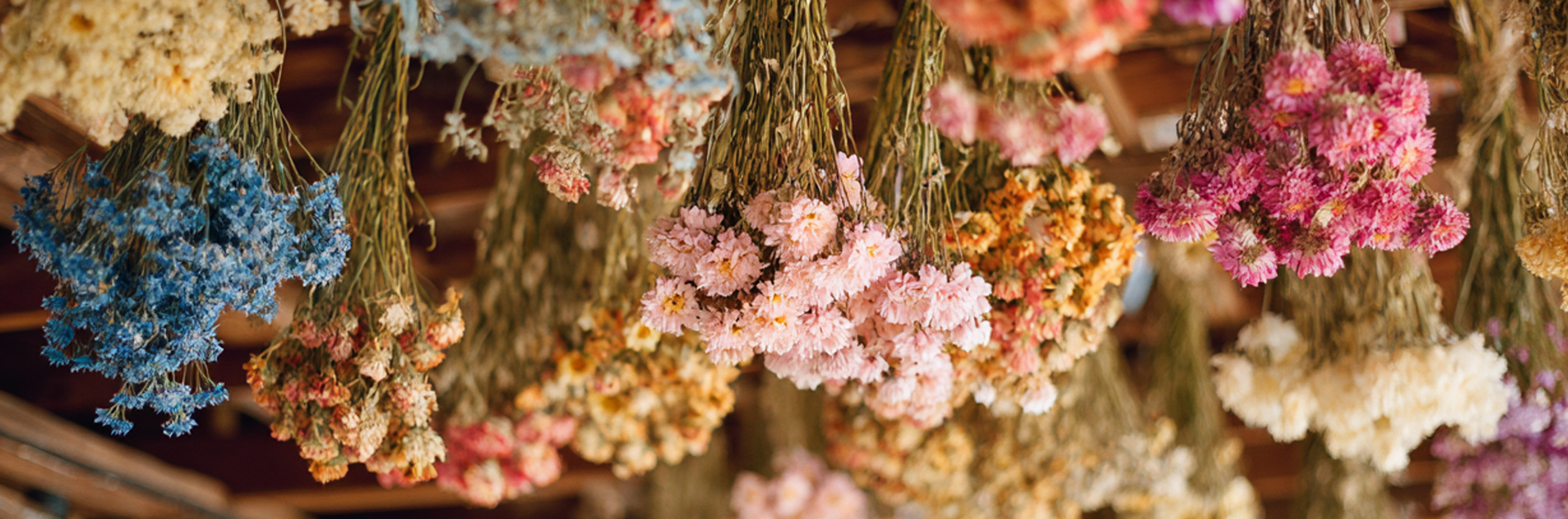
Dried flowers are naturally long‑lasting, but they still appreciate a little care. These simple practices for dried flower care help each stem stay beautiful for as long as possible — nothing complicated, just small, thoughtful steps that honour their delicate nature.
Light & Placement
Keep Them Out of Direct Sunlight
Soft, indirect light helps dried flowers keep their natural tones. Strong sunlight can gently fade colours over time, especially in naturally dried stems. A bright room is perfect — just avoid placing arrangements right on a sunny windowsill.
Avoid Humidity
Bathrooms, kitchens, and damp corners aren’t ideal. Dried flowers prefer a dry, steady environment where the air can move freely. A living room, hallway, or bedroom is usually the best place for them to thrive.
Dusting & Handling
Dust Them Lightly
A soft brush, a clean makeup brush, or a cool hairdryer on a low setting works beautifully. Move slowly and keep a little distance — dried flowers are delicate, and gentle dusting helps them stay fresh without disturbing their shape.
Handle With Care
Hold arrangements from the base or the vessel rather than the stems. Once arranged, try not to reshape them too often; dried flowers are happiest when left to settle into their display.
Temperature & Environment
Keep Them Away From Heat Sources
Radiators, fireplaces, and direct heat can make stems more brittle. A cooler spot in the room helps them keep their structure for longer.
If You Have Pets or Children
Place arrangements slightly out of reach. Most dried flowers are safe to display, but curious hands (or paws) can easily snap delicate stems and some flowers are toxic if ingested.
Longevity & Natural Variation
How Long Do Dried Flowers Last?
Most dried flowers last months to years, depending on the variety and where they’re placed.
Gentle Changes Over Time
Dried flowers naturally soften and shift in colour as they age, giving each arrangement its own evolving character.
Safety, Allergies & Natural Materials
Allergies
Dried flowers release far less pollen than fresh flowers, but very sensitive individuals may still react to certain varieties. If you’re gifting an arrangement, it’s worth keeping this in mind.
Toxicity
Most dried flowers are safe to display in the home. However, like many plants, a few varieties can be toxic if ingested. Keep arrangements out of reach of pets or young children who may be tempted to chew or explore.
Flammability
Dried flowers are naturally flammable, so keep arrangements away from open flames, heat and lit candles.
Sharp or Woody Stems & Wires
Some stems naturally dry with sharper edges and a few products may include thin wires; handle gently.
Colour-Transfer
A few naturally dyed or preserved stems may transfer colour if placed against porous fabrics or walls.
Further Inspiration
If you’d like to explore more about dried flowers and dried flower care, Everlasting Blooms by Layla Robinson is a lovely introduction to creative projects, available through Waterstones and other UK booksellers.
Explore More
You can find growing advice, tutorials, and FAQs in the Care & Growing section, or learn more about the studio’s methods on the Sustainability page.
Dried Flower Care
No Direct
Sunlight
Avoid
Humidity
Avoid
Heat
Dust
Gently
Handle
Gently
A Gentle Guide to
Dried Flower Care
Dried flowers are naturally long‑lasting, but they still appreciate a little care. These simple practices for dried flower care help each stem stay beautiful for as long as possible — nothing complicated, just small, thoughtful steps that honour their delicate nature.
Light & Placement
Keep Them Out of Direct Sunlight
Soft, indirect light helps dried flowers keep their natural tones. Strong sunlight can gently fade colours over time, especially in naturally dried stems. A bright room is perfect — just avoid placing arrangements right on a sunny windowsill.
Avoid Humidity
Bathrooms, kitchens, and damp corners aren’t ideal. Dried flowers prefer a dry, steady environment where the air can move freely. A living room, hallway, or bedroom is usually the best place for them to thrive.
Dusting & Handling
Dust Them Lightly
A soft brush, a clean makeup brush, or a cool hairdryer on a low setting works beautifully. Move slowly and keep a little distance — dried flowers are delicate, and gentle dusting helps them stay fresh without disturbing their shape.
Handle With Care
Hold arrangements from the base or the vessel rather than the stems. Once arranged, try not to reshape them too often; dried flowers are happiest when left to settle into their display.
Temperature & Environment
Keep Them Away From Heat Sources
Radiators, fireplaces, and direct heat can make stems more brittle. A cooler spot in the room helps them keep their structure for longer.
If You Have Pets or Children
Place arrangements slightly out of reach. Most dried flowers are safe to display, but curious hands (or paws) can easily snap delicate stems and some flowers are toxic if ingested.
Longevity & Natural Variation
How Long Do Dried Flowers Last?
Most dried flowers last months to years, depending on the variety and where they’re placed.
Gentle Changes Over Time
Dried flowers naturally soften and shift in colour as they age, giving each arrangement its own evolving character.
Safety, Allergies &
Natural Materials
Allergies
Dried flowers release far less pollen than fresh flowers, but very sensitive individuals may still react to certain varieties. If you’re gifting an arrangement, it’s worth keeping this in mind.
Toxicity
Most dried flowers are safe to display in the home. However, like many plants, a few varieties can be toxic if ingested. Keep arrangements out of reach of pets or young children who may be tempted to chew or explore.
Flammability
Dried flowers are naturally flammable, so keep arrangements away from open flames, heat and lit candles.
Sharp or Woody Stems & Wires
Some stems naturally dry with sharper edges and a few products may include thin wires; handle gently.
Colour-Transfer
A few naturally dyed or preserved stems may transfer colour if placed against porous fabrics or walls.
Further Inspiration
If you’d like to explore more about dried flowers and dried flower care, Everlasting Blooms by Layla Robinson is a lovely introduction to creative projects, available through Waterstones and other UK booksellers.
Explore More
You can find growing advice, tutorials, and FAQs in the Care & Growing section, or learn more about the studio’s methods on the Sustainability page.